Following the Coast Before Breakfast
An early walk along a headland shows how wind, light and the shape of the path can turn a familiar shore into a small expedition.
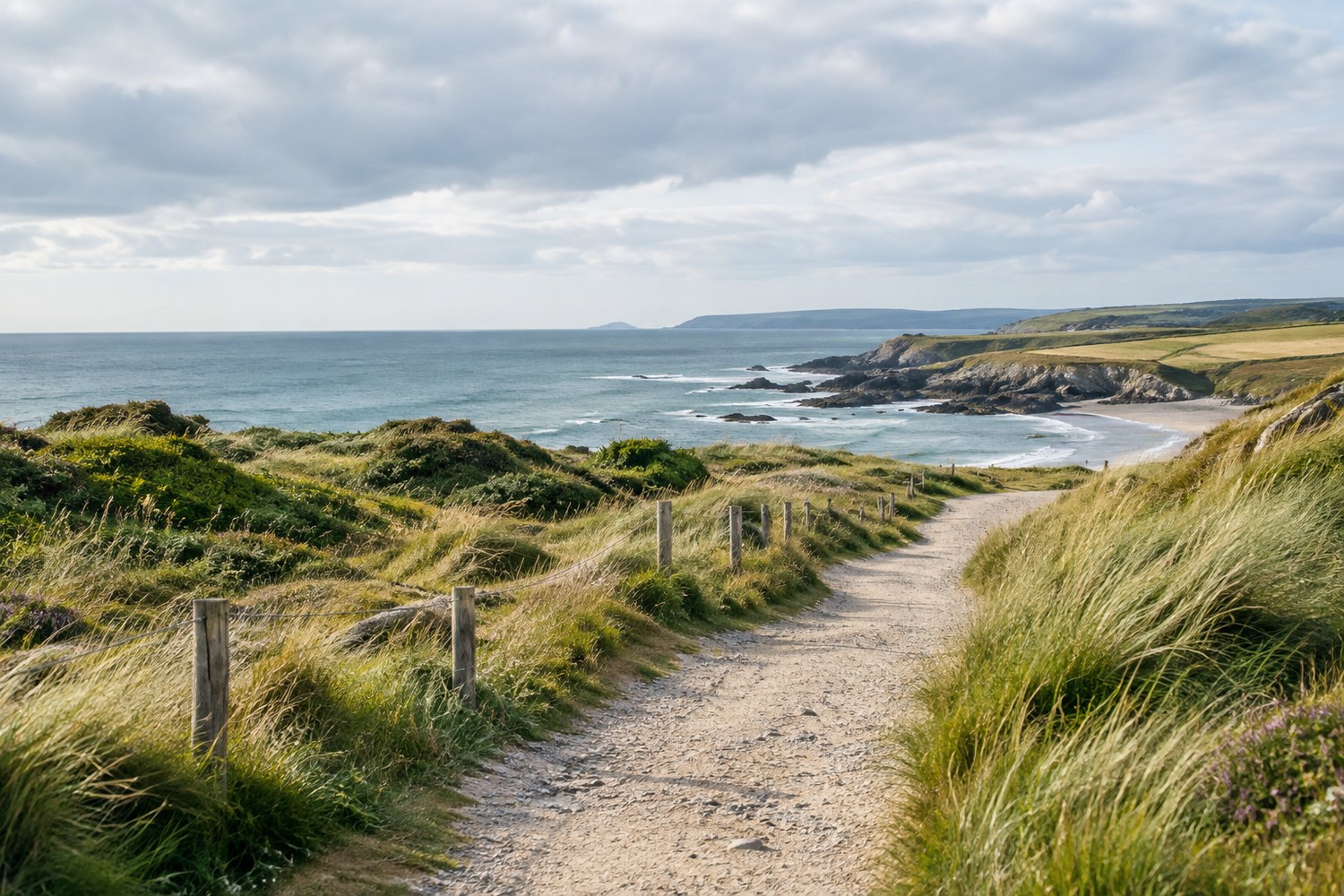
There is a particular kind of quiet on a coast before the cafés open and the car parks fill. The sea is already busy, of course. Waves keep folding onto the shore, gulls argue over the same patch of air, and wind moves through the grass with more confidence than it will later in the day. But the human layer has not arrived yet, and that changes the scale of a walk.
On an early headland path, distance becomes easier to read. A bend that would feel like a minor detour in the afternoon becomes a decision: stay high above the water, or take the sandy track that drops toward the next cove? With no need to hurry, the useful answer is usually the one that keeps the horizon in view.
Let the weather choose the pace
Coastal walking rewards attention to conditions more than ambition. A clear morning can make five kilometers feel light; a crosswind can turn the same route into deliberate work. The useful habit is to stop treating weather as background information. Notice which direction the grass is leaning. Look at the surface of the sea. Feel whether the air cools as the path climbs away from shelter.
This is not about reading the coast like a sailor. It is simply a way to walk with the place rather than through it. When wind arrives in strong bursts, slowing down can make the route more enjoyable. When a cloud bank breaks and light moves across the water, pausing for a minute is often more memorable than pushing toward the next marker.
Early starts also make small transitions easier to see. The path may begin between hedges, open suddenly onto cropped grass, then soften into sand near the shore. Each surface changes your stride. Boots sound different on a stone lane than they do on dry earth. Gravel invites a shorter step. Damp grass encourages more careful footing. A good walk is partly the sum of these tiny adjustments.
Use landmarks, not milestones
I like coastal routes that can be remembered without numbers. The old gate. The white house across the inlet. The place where the path squeezes between bracken and rock. A bench that faces slightly away from the obvious view. These are more useful than counting minutes because they give a walk its own internal map.
Landmarks also make turning back feel less like failure. If the weather changes or breakfast starts to sound more appealing than the next hill, it is easy to say, “I’ll go as far as the stone wall.” The route remains complete because it has a shape, not because it reached a particular distance.
The best early walks leave enough energy for the rest of the day. They sharpen it rather than consume it.
Carry less than you think
For a short coastal morning, a small bottle of water, a light layer and a phone or camera are usually enough. The less you carry, the easier it is to respond to the path. You can sit on a rock without reorganizing a bag. You can take a steeper little spur to see where it goes. You can keep both hands free when the wind picks up.
A camera changes the walk in an interesting way, even when you barely use it. It gives you permission to look for edges: the dark line where wet sand meets dry, fence posts repeating into the distance, a flash of yellow flowers against gray rock. But the most useful rule is to take the photograph after you have already looked. Otherwise the walk can become a collection exercise rather than a morning outdoors.
By the time the path turns back toward town, the coast usually feels busier. Doors open. Vans appear. The smell of coffee and warm bread drifts into the street. That contrast is part of the pleasure. An hour earlier, the shoreline seemed to belong to wind and water; now it folds back into ordinary life.
Nothing dramatic has happened. That is the point. A short walk before breakfast can be enough to reset the scale of a day: first the wide horizon, then the small table, the mug, the map folded away until next time.